






Automatic Toilet Roll Packaging Machine: Complete Buying Guide for Tissue Converters
Automatic Toilet Roll Packaging Machine: Complete Buying Guide for Tissue Converters
For tissue converting plants, end‑of‑line tissue packaging often becomes the main production bottleneck, especially when you scale‑up multi‑roll toilet paper and kitchen towel output. Many tissue converters still rely on manual bundling, which brings high labor cost, inconsistent pack quality, high scrap rate and limited throughput. Investing in a reliable automatic toilet roll packaging machine helps you cut manpower, reduce material waste and deliver shelf‑ready packs for retail and wholesale markets.
However, many buyers make a common mistake: only comparing nominal speed on datasheets without evaluating real‑world performance, format flexibility and total cost of ownership (TCO). Even high‑speed tissue paper wrapping machine may under‑perform if it cannot match your roll dimensions, bag materials or existing tissue converting line.
This practical buying guide shares key evaluation criteria for selecting automatic tissue packaging equipment, with reference to the ALX‑DP200S‑2 fully‑automatic double‑layer multi‑row packaging machine, widely used for toilet rolls and kitchen towel packaging.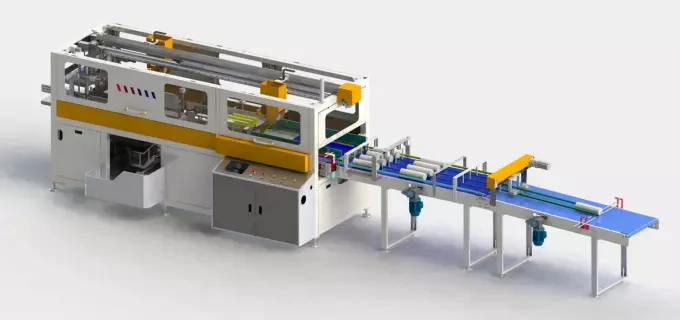
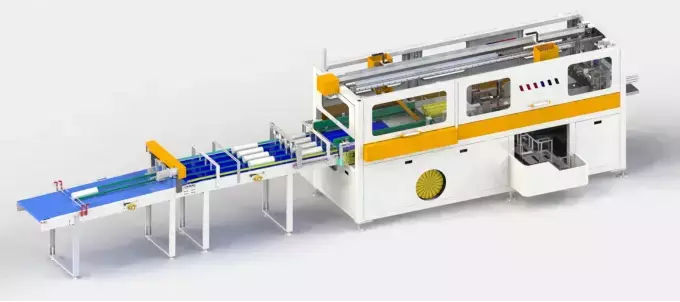 ALX‑DP200S‑2 fully‑automatic double‑layer multi‑row packaging machine
1. Audit Your Real‑world Production Requirements First
Before requesting quotations for a toilet roll packaging machine, document your actual production conditions.
1.1 Target Production Throughput
- Small‑scale tissue workshops: Low daily output, semi‑automatic tissue wrapping machines are cost‑effective options.
- Mid‑size tissue mills: Stable mass‑production for multi‑roll bundles, servo‑driven full‑automatic packaging equipment is recommended.
- Large converting factories: Need seamless connection with upstream rewinder & cutter, and compatibility with downstream case packer or palletizer.
The ALX‑DP200S‑2 kitchen towel packaging machine reaches 30 packs/min design speed, stable practical throughput at 25 packs/min. It connects directly to upstream cutting machine. Paper rolls pass through a 2‑meter straight conveyor for automatic flipping, diverting and sorting, perfectly suited for inline continuous tissue converting line.
Important note: Nominal maximum speed is tested under ideal lab conditions. Always confirm real‑running speed under your actual roll‑size and bag‑material settings.
1.2 Finished‑product Format & Size Range
Confirm your product portfolio: single‑roll packs, multi‑roll bundles (2‑48 rolls), household toilet rolls, kitchen towels, hotel small rolls. Different roll diameter, height and stacking layout set strict requirements for feeding, diverting and pushing mechanisms.
Many low‑cost multi‑roll tissue bundling machine only support fixed sizes. Format changeover requires heavy mechanical replacement and causes long production downtime.
ALX‑DP200S‑2 accepts finished‑product dimension: L 180‑600 mm × W 150‑400 mm × H 100‑250 mm. It supports single‑layer / double‑layer, double‑row to four‑row stacking, both horizontal and vertical arrangement. Operators adjust parameters on touch‑screen HMI without swapping large mechanical parts.
1.3 Packaging Material Compatibility
Check whether you run composite bags, PE bags or recyclable flexible films. Film thickness directly impacts sealing temperature, cutting performance and reject rate. ALX‑DP200S‑2 features adjustable sealing temperature from 0‑300℃, 15 mm trimming margin, compatible with most common flexible packaging bags used in tissue industry.
1.4 Workshop Utility & Floor Space
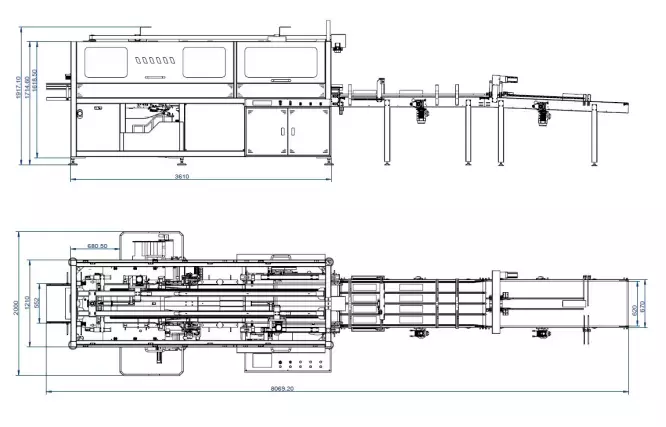
Measure available floor space, power supply (380V 50Hz), compressed‑air requirement and reserved space for maintenance. ALX‑DP200S‑2 overall dimension: 6900 × 1560 × 1650 mm, total weight 2000 KG, optimal working air pressure 0.6 MPa. Custom layout modification is available according to factory layout.
2. Full‑automatic vs Semi‑automatic Toilet Roll Packaging Machine
| Item | Semi‑automatic tissue wrapping machine | Full‑automatic servo‑driven packaging machine |
|---|---|---|
| Labor requirement | Manual feeding & sorting, more operators | Minimal attendance for bag refilling & finished‑goods collection |
| Format flexibility | Fair, frequent changeover takes time | High, touch‑screen recipe recall |
| Throughput ceiling | Limited by manual operation | High, stable for mass‑production |
| Capital investment | Lower CAPEX | Higher upfront cost, lower long‑term labor expense |
| Best fit | Small‑batch, frequently‑changed SKUs | Mid‑large tissue converting plant, continuous inline production |
For growing tissue mills suffering labor shortage, full‑automatic end‑of‑line tissue packaging brings clear ROI by cutting manual work and reducing defective packs.
3. Six Critical Checkpoints to Avoid Costly Sourcing Mistakes
3.1 Format Change‑over Flexibility
Ask suppliers: How long does format switch take? Do I need many spare mechanical parts for new sizes? ALX‑DP200S‑2 uses 4‑channel servo‑driven diverting & sorting unit. Product row quantity can be adjusted directly on HMI, supporting mixed‑SKU flexible production.
3.2 Scrap & Consumable Waste Control
High reject rate on bag opening, mis‑feeding or tearing will raise your production cost month by month. ALX‑DP200S‑2 is equipped with dual bag magazines (one working, one standby). Brush plus air‑blow mechanism prevents double‑bag picking. Photoelectric inspection detects failed bag‑opening and triggers automatic waste discharge to minimize bag loss. Packaging qualification rate ≥98 %.
3.3 Quality of Core Components
Servo motors, PLC, temperature controllers and pneumatic fittings determine machine uptime. Cheap machines cut corners on key parts, saving initial cost but causing frequent unplanned downtime. ALX‑DP200S‑2 adopts industrial‑grade components including Xinje servo motors, Delta power supply, Chint electric parts and Yudian temperature controller. PLC reserves Ethernet port for MES data collection for smart tissue factory deployment.
3.4 Line Integration Capability
Confirm if the tissue paper wrapping machine can connect to your existing rewinder, cutter and downstream equipment. Retrofit work will add extra cost if integration is not supported.
3.5 Safety & Machine Compliance
Safety guard, emergency stop function within 0.3s, alarm & fault display system are essential for tissue plant operation. For EU market, verify CE compliance requirements before shipment.
3.6 Commissioning, Training & Spare‑part Support
Industrial packaging machines cannot reach full performance right after delivery. Reliable supplier provides on‑site commissioning, operator training, remote troubleshooting and standard wearing spare‑parts together with machine. ALX‑DP200S‑2 comes with pre‑supplied consumables: nylon pushing heads, manganese‑steel blades, heating tubes, Teflon tapes and dedicated service tools.
4. Total Cost of Ownership (TCO): Don’t Only Compare Unit Price
Many tissue converters only compare machine price while ignoring long‑term expenses: labor cost, packaging‑bag waste, maintenance cost and production loss caused by downtime.
A slightly higher‑priced automatic toilet roll packaging machine with low reject rate and stable uptime often delivers shorter payback period than low‑cost problematic units, especially for mills with high daily output.
Frequently Asked Questions
Q: What is the difference between toilet roll packaging machine and kitchen towel packaging machine?
A: Kitchen towel requires double‑layer multi‑row stacking layout. Standard toilet roll wrapper may lack multi‑layer diverting mechanism. Models like ALX‑DP200S‑2 support both household toilet rolls and kitchen towel bundles with flexible format adjustment.
Q: Can a full‑automatic tissue wrapping machine work standalone without connecting upstream cutter?
A: Yes. It can run as standalone unit, but inline connection with cutting machine maximizes overall line efficiency.
Q: How many operators do I need for a full‑automatic multi‑roll tissue bundling machine?
A: Normally only 1‑2 operators for bag replenishment and finished‑goods collection.
Final Conclusion
Selecting a proper toilet roll packaging machine is not chasing the highest nominal speed. The ideal solution matches your product formats, daily throughput, workshop condition and total‑cost budget.
For mid‑large tissue converting plants producing multi‑roll toilet paper and kitchen towel bundles, ALX‑DP200S‑2 double‑layer multi‑row fully‑automatic packaging machine offers proven end‑of‑line packaging performance.
CTA for independent site: Need technical datasheet or project quotation for your tissue converting line upgrade? Contact our engineering team to discuss your packaging requirements.
Previous: ALX-GTS60 Fully Automatic Bottom Pull Tissue Packaging Machine | Ailixing
Next: How to Choose the Right Automatic Toilet Roll Packaging Machine for Your Tissue Mill
